

-
Duration:
2 Days
-
Course Price
E2 080.00
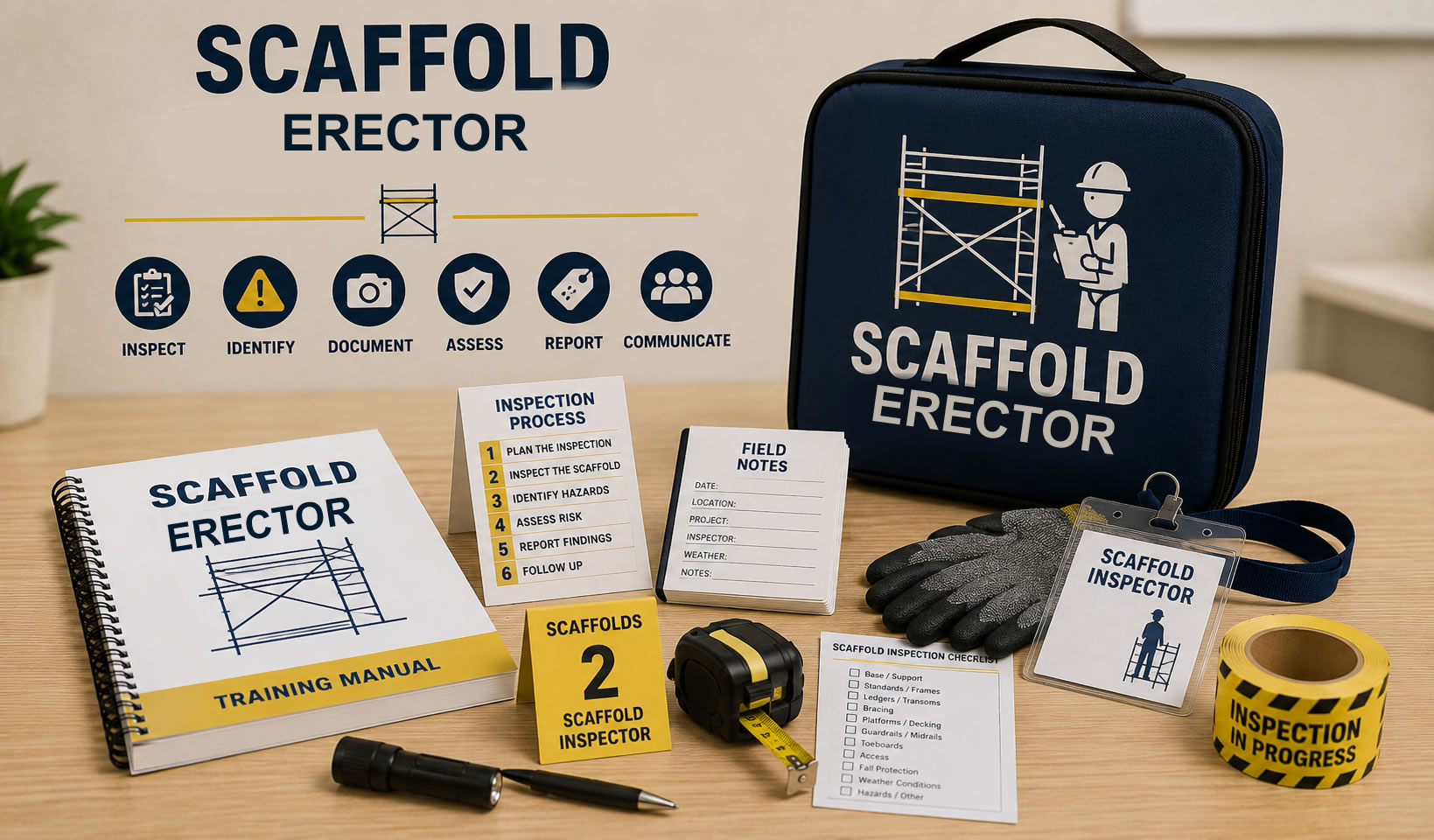
Scaffold Erector
Welcome to the Scaffold Erector course. This programme provides learners with the essential knowledge and practical skills required to erect, alter, inspect, and dismantle scaffolding safely and in accordance with workplace safety standards. Learners will gain an understanding of scaffold components, structural stability, hazard control, safe working practices, and legal responsibilities associated with scaffolding operations.
Course Overview
The Scaffold Erector course equips learners with the knowledge and practical skills needed to erect, modify, inspect, and dismantle scaffolding safely in a workplace environment. The course covers scaffold types, scaffold components, erection procedures, stability requirements, fall prevention, inspection procedures, and the responsibilities of scaffold erectors and supervisors.
Learners will understand how to work safely at height, identify scaffolding hazards, use appropriate access methods, and ensure scaffolding structures are erected and maintained in a safe and compliant condition.
Learning Methods
This course combines theoretical learning with practical demonstrations and hands-on scaffold erection exercises to ensure learners develop the confidence and competence to perform scaffolding duties safely and effectively.
- Interactive classroom presentations
- Scaffold safety discussions
- Practical scaffold erection demonstrations
- Hands-on scaffold assembly exercises
- Work at height safety scenarios
- Scaffold inspection activities
- Group discussions and problem-solving activities
- Fall protection awareness demonstrations
- Trainer-led coaching and guidance
- Practical competency assessments
Learners will participate in practical exercises designed to build confidence and ensure they can erect, inspect, alter, and dismantle scaffolding safely and effectively in the workplace.
Upon successful completion of this course, learners will be able to:
1. Understand the role and responsibilities of a scaffold erector.
2. Identify different types of scaffolding and their uses.
3. Recognise scaffold components and their functions.
4. Understand the legal and safety requirements for scaffolding work.
5. Conduct pre-use checks on scaffold materials and components.
6. Prepare a safe work area for scaffold erection.
7. Erect scaffolding structures safely and according to procedure.
8. Use correct methods for scaffold alteration and dismantling.
9. Ensure scaffold stability, alignment, and structural integrity.
10. Identify common scaffolding hazards and unsafe conditions.
11. Apply fall prevention and fall protection measures.
12. Use access ladders, platforms, guardrails, and toe boards correctly.
13. Understand load limits and safe loading practices on scaffolds.
14. Carry out basic scaffold inspections and identify defects.
15. Report damaged or unsafe scaffold components.
16. Maintain good housekeeping during scaffolding work.
17. Communicate effectively with team members during scaffold operations.
18. Follow emergency procedures related to working at height.
19. Support safe use of scaffolding by other workers.
20. Demonstrate practical scaffold erection and dismantling skills during assessments.
Who is this course for?
This course is designed for workers involved in erecting, altering, inspecting, or dismantling scaffolding structures, as well as supervisors and safety personnel responsible for scaffolding activities. No previous scaffold erection experience is required unless specified by the employer.
This course is ideal for:
- Scaffold Erectors
- Construction Workers
- Maintenance Teams
- Contractors working at height
- Supervisors and Team Leaders
- SHEQ Officers
- Health and Safety Representatives
- Safety Committee Members
- Plant and shutdown workers
- Industrial maintenance personnel
- Warehouse and facility maintenance staff
- Site safety coordinators
- Mining personnel involved in scaffolding work
- Engineering and fabrication teams
- Rigging and access support workers
- Facility management staff
- Temporary structure installation teams
- Operations staff working around scaffolds
- Project managers overseeing scaffold work
- Construction foremen
- Shutdown and turnaround teams
- Business owners in construction and maintenance sectors
- Anyone responsible for scaffold erection and safety.
Successful learners will have the ability to erect, inspect, alter, and dismantle scaffolding safely, identify hazards, and support compliance with workplace scaffolding and work-at-height safety requirements.
Course Content
This course provides learners with essential scaffolding knowledge and practical skills required to erect, inspect, alter, and dismantle scaffolding safely and effectively.
- Introduction to scaffolding safety
- Roles and responsibilities of scaffold erectors
- Legal and workplace requirements for scaffolding
- Types of scaffolding and applications
- Scaffold components and materials
- Pre-use inspection of scaffold components
- Preparing the work area for scaffold erection
- Scaffold erection procedures
- Bracing, tying, and stabilising scaffolds
- Safe access and egress methods
- Platforms, guardrails, and toe boards
- Load limits and scaffold loading safety
- Scaffold alteration procedures
- Scaffold dismantling procedures
- Working at height safety principles
- Fall prevention and fall protection awareness
- Scaffold inspection and defect identification
- Reporting damaged or unsafe scaffolds
- Housekeeping in scaffolding work areas
- Communication and teamwork during scaffold operations
- Emergency procedures for work at height
- Practical scaffold assembly exercises
- Scenario-based safety discussions
- Final practical assessment
Upon successful completion, learners will have the knowledge and practical skills required to erect, inspect, alter, and dismantle scaffolding safely, identify workplace hazards, and contribute to a safer and more compliant working environment.
Quick Contact